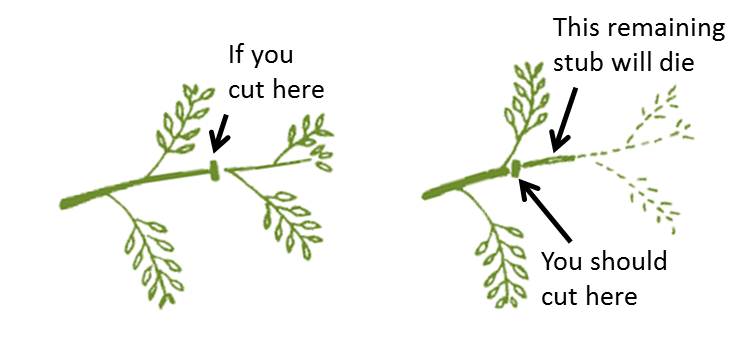
Pruning / Basic Pruning Cuts Sunset Magazine - You can cut back the entire plant to 6 to 12 inches of growth (basically starting over), or you can prune gradually over time.. If the size is of no concern, simply remove spent flowers and any broken stems. Dormant pruning is a more aggressive pruning. As a grower, you can train your plant to grow in a certain manner using pruning. Pruning is the process of cutting away dead or overgrown branches or stems to promote healthy plant growth. You should choose this method if your rhododendron is messy looking or overgrown and you want it to try growing again.
When a large portion of the tree is removed during the dormant season, the energy reserves of the tree remain unchanged. Pruning can also be considered preventive maintenance for both insect and disease damage. Here is what they are: Pruning is common practice in orchard and vineyard management for the improvement of flowering and fruiting. Pruning is the process of cutting away dead or overgrown branches or stems to promote healthy plant growth.
How To Prune A Tree Diyer S Guide Bob Vila from empire-s3-production.bobvila.com For branches more than 1 inch thick and beyond arm's reach. Dormant pruning is especially important for apples, pears, and crabapples because pruning wounds during the growing season expose the trees to a bacterial disease called fireblight. Pruning can also be considered preventive maintenance for both insect and disease damage. Pruning flowers is much different (and easier) than pruning bushes or trees. Many problems may be prevented by pruning correctly during the formative years for a tree or shrub. Cut capacity steel saw blade 15 in. Hydrangeas make beautiful focal points in the garden, and they generally require minimal care other than pruning. The late dormant season is the best time for most pruning.
Cut capacity steel saw blade 15 in.
Pruning reduces the complexity of the final classifier, and hence improves predictive accuracy by the reduction of overfitting. Pruning is the practice of selectively removing plant parts (branches, buds, spent flowers, etc.) to manipulate the plant for horticultural and landscape purposes. Pruning at this time will help the shrub produce bigger, showier flowers. Dormant pruning is a more aggressive pruning. For most shrubs and trees, it helps to prune at the right time. Any kind of plum that can be dried without spoiling. Reviews of the previous edition: Burn the stems or bag and discard them instead. As a grower, you can train your plant to grow in a certain manner using pruning. In cases of severe injury or when the plant is overgrown, remove the entire stem by cutting it. When you look at your flowers and begin noticing the plant seems dead in specific areas, it's important to prune those areas away. For major pruning, the best time is in early spring before the plant is ready to put out new growth, so it has the full growing season to … continue reading pruning Bow pruning saw by fiskars.
To control the spread of diseases while pruning, dip your pruning shears in rubbing alcohol or a solution of one part bleach to nine parts water. For branches more than 1 inch thick and beyond arm's reach. One aim of maintenance pruning is to protect your woody plants from pests and disease, which can gain entry into a plant through dead wood, broken branches, and wounds caused by branches that are rubbing together. Pruning often stimulates flowering and can improve the structure or form of a shrub. Cultivars of merit include 'barbara,' 'bridal veil,' 'brussels lace,' 'chantilly lace,' 'grandiflora,' and 'limelight.'.
Pruning Basics For Trees And Shrubs from www.uky.edu The timing of dormant season pruning is critical, and should begin as late in the winter as feasible to avoid injuring the tree. The partially dried fruit of any of several varieties of the common plum, prunus domestica. Check out our lowest priced option within pruning tools, the 21 in. Although many hydrangeas have interesting foliage and bark, most are grown for their large, showy blossoms. If the stem is diseased, make sure you cut back to healthy wood. Bow pruning saw by fiskars. With its straightforward prose and diagram, the pruning book is a good antidote to 'pruning panic', an affliction known to experienced and novice gardeners alike. country living gardener reich does a super job of simplifying what can be a confusing topic. Pruning flowers is much different (and easier) than pruning bushes or trees.
Hydrangeas make beautiful focal points in the garden, and they generally require minimal care other than pruning.
If the stem is diseased, make sure you cut back to healthy wood. They didn't get enough sun, an early frost or cold spell killed the buds, or they were. The partially dried fruit of any of several varieties of the common plum, prunus domestica. When you look at your flowers and begin noticing the plant seems dead in specific areas, it's important to prune those areas away. If the size is of no concern, simply remove spent flowers and any broken stems. Pruning is the process of cutting away dead or overgrown branches or stems to promote healthy plant growth. In cases of severe injury or when the plant is overgrown, remove the entire stem by cutting it. In fact, you have only a few goals to reach to prune a flower properly. Pruning is the practice of selectively removing plant parts (branches, buds, spent flowers, etc.) to manipulate the plant for horticultural and landscape purposes. You can cut back the entire plant to 6 to 12 inches of growth (basically starting over), or you can prune gradually over time. Pruning is a horticultural, arboricultural and silvicultural practice involving the selective removal of certain parts of a plant, such as branches, buds, or roots. Pruning changes the form and growth of a plant. However, many gardeners like their hydrangeas to have smaller flowers on sturdier stems.
Look for pruners with a handle that disassembles for easy storage. This pruning method is a reset for your plant. It is the quickest method of pruning. Pruning to avoid losing next year's blooms, you can prune small branches when the plant is in bloom (and enjoy them inside the house) or soon after. To control the spread of diseases while pruning, dip your pruning shears in rubbing alcohol or a solution of one part bleach to nine parts water.
Plan On Pruning Your Fruit Trees from www.noble.org Pruning, in horticulture, the removal or reduction of parts of a plant, tree, or vine that are not requisite to growth or production, are no longer visually pleasing, or are injurious to the health or development of the plant. If the size is of no concern, simply remove spent flowers and any broken stems. For branches more than 1 inch thick and beyond arm's reach. Some are best pruned in winter; Pruning flowers is much different (and easier) than pruning bushes or trees. Burn the stems or bag and discard them instead. Most species of rhododendrons will be able to survive this method of pruning, but a few cannot, so it is worth researching your specific type before using this method. One aim of maintenance pruning is to protect your woody plants from pests and disease, which can gain entry into a plant through dead wood, broken branches, and wounds caused by branches that are rubbing together.
For most shrubs and trees, it helps to prune at the right time.
Pruning can also be considered preventive maintenance for both insect and disease damage. Some are best pruned in winter; 4.5 out of 5 stars 234. However, many gardeners like their hydrangeas to have smaller flowers on sturdier stems. As a grower, you can train your plant to grow in a certain manner using pruning. Although many hydrangeas have interesting foliage and bark, most are grown for their large, showy blossoms. One aim of maintenance pruning is to protect your woody plants from pests and disease, which can gain entry into a plant through dead wood, broken branches, and wounds caused by branches that are rubbing together. Coarse teeth cut on the pull stroke for easy and safe pruning. If the stem is diseased, make sure you cut back to healthy wood. If this is your preference, do your pruning in the fall instead, to allow the plants to grow strong branches before blooming. Bow pruning saw by fiskars. Lowest price in 30 days. Check out our lowest priced option within pruning tools, the 21 in.